A shipment may arrive with several invoices, packing lists and transport documents. Preparing it for customs or transport planning means bringing those sources together, applying the right checks and delivering data in the structure your systems need.
The work extends beyond reading individual fields. Documents may use different layouts, languages and references. A supplier’s product code may need to be translated into an internal code. Values may need to be calculated, and information checked before it can be used downstream.
Repeated copying and manual checks add to the team’s workload. Edentri combines document handling, AI-supported data capture, lookups and advanced validation rules, with delivery to existing customs, transport and other operational systems.
Organise the documents around the job
The incoming file structure does not always match the operational task. One PDF may contain several documents. Information needed for one job may also be spread across separate files.
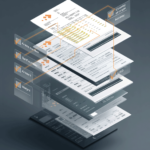
Edentri supports splitting documents automatically or manually, combining files before processing and arranging pages in the required order. Data from multiple documents can be consolidated into one or more output files. This makes it possible to organise the information around how the receiving process needs to use it.
Capture the detail the next step depends on
Header fields such as sender, recipient, dates, references and totals provide the context. Customs and logistics work also depends on the detail within the shipment. Edentri captures line items and supports complex document layouts containing multiple tables.
The useful result is structured data that can be worked with: fields that can be checked, codes that can be converted and values that can be prepared for the destination system.
Use lookups to connect external data to internal records
A value can be read correctly and still need conversion before another system can use it. Edentri’s configurable lookups allow customers to define mappings for data conversion and validation.
For example, a lookup could translate a supplier’s item reference into an internal product code, or check an extracted value against an agreed list. These are illustrative configurations: the relevant records, mappings and maintenance responsibilities are defined with the customer.
Make validation fit the process
Required information, accepted values and calculations vary between customers, document sets and destination systems. Edentri combines AI-supported data capture with configurable lookups and advanced validation rules, including calculations for derived values such as totals and weights.
Consider an illustrative shipment containing an invoice and a packing list. A customer might want to check a required reference, convert a supplier code and compare a calculated line total with a stated total. These checks are configured against the document structure and business rules, with an agreed review step for discrepancies.
The customer knows which variations are acceptable and which discrepancies need attention. Edentri works with that knowledge to configure the process, including where user confirmation is needed.
Connect AI and agents to a defined operational task
Edentri supports integrations with AI platforms to extend functionality. The useful starting point is a specific task within the workflow, supported by the relevant documents, data and business rules.
Where an AI agent is introduced, its role needs to be defined: what information it can use, which actions it may take and when an operator must confirm the result. Structured data, advanced validation rules and clear handovers provide a foundation for that work. The capabilities and integrations required are established for the specific use case.
Deliver the result into the existing workflow
Documents can reach Edentri through upload, a customer portal, SFTP, email or a REST API. After processing and validation, structured data can be delivered to a Customs Management System, TMS, ERP or another backend, using the agreed integration and output format.
That may mean preparing declaration data for a customs team or order data for a TMS. The receiving system’s requirements shape the fields, checks and output.
Build the workflow with the people who use it
Start with one defined process, real document examples and the destination system’s requirements. Together, Edentri and the customer establish document grouping, lookups, validation and operator review. The intended value is less repeated work, more consistent data and fewer interruptions. Actual benefits depend on the document mix and the configured workflow.
Bring a representative document set and the requirements of the system that will receive the data. We can use them to map the steps from incoming documents to a usable operational result.
Contact us
Let’s discuss your customs or logistics workflow and where automation can help.

Morten Buskop
Chief Sales Officer / CSO